
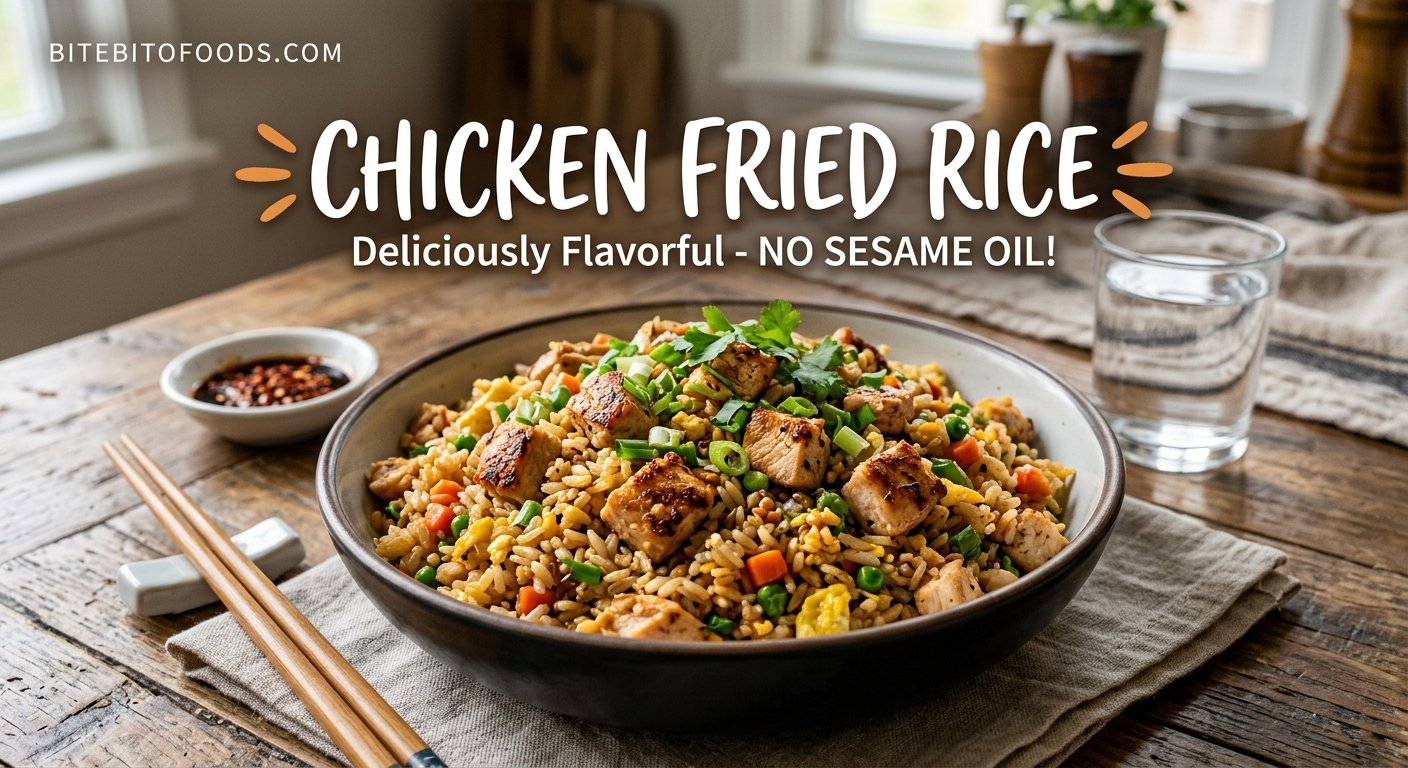
Chicken Fried Rice Without Sesame Oil: Easy, Flavorful, and Better Than Takeout

Chicken fried rice without sesame oil is a simple, delicious meal that proves you do not need every traditional ingredient to make a satisfying homemade dinner. With tender chicken, fluffy rice, colorful vegetables, eggs, and a flavorful soy-based seasoning, you can prepare a restaurant-inspired dish using everyday pantry ingredients.
Whether you have run out of sesame oil, dislike its strong flavor, or simply want to cook with ingredients already in your kitchen, this easy chicken fried rice recipe is worth trying. It comes together in one pan, uses leftover rice, and is perfect for busy weeknights when you want something quick without ordering takeout.
The best part is that you can still achieve delicious flavor and lightly crispy rice without sesame oil. The secret is using a hot pan, properly prepared rice, and a balanced combination of seasonings.
In this guide, you will learn how to make chicken fried rice without sesame oil, which substitutes work best, how to keep the rice from becoming soggy, and how to customize the recipe for your family.
Why Make Chicken Fried Rice Without Sesame Oil?
Sesame oil is commonly used in many fried rice recipes because it adds a distinctive nutty aroma. However, it is not essential for making delicious chicken fried rice at home.
There are several reasons to prepare this recipe without it.
First, sesame oil may not be available in every kitchen. If you have chicken, rice, eggs, vegetables, and a bottle of cooking oil, you can make a satisfying meal without buying extra ingredients.
Second, some people prefer a milder flavor. Sesame oil has a noticeable aroma that can sometimes overpower other ingredients. Leaving it out allows the chicken, garlic, vegetables, and seasonings to shine.
Third, this recipe is easy to customize. You can use vegetable oil, canola oil, avocado oil, or another neutral cooking oil suitable for high-heat cooking.
Finally, homemade chicken fried rice is a practical way to use leftover rice and cooked chicken. Instead of letting leftovers sit in the refrigerator, you can turn them into a completely different meal in just a few minutes.
What Does Chicken Fried Rice Without Sesame Oil Taste Like?
Chicken fried rice without sesame oil still tastes savory, satisfying, and full of flavor. The chicken provides a hearty base, while garlic and green onions add freshness. Soy sauce contributes a salty, umami flavor, and the vegetables bring sweetness and texture.
Eggs make the dish more filling, while properly cooked rice absorbs the seasoning without becoming mushy.
Although you will miss the characteristic nutty aroma of sesame oil, you will not lose the essential qualities of fried rice. A hot pan and well-balanced seasoning make a much bigger difference than many beginners expect.
For extra flavor, you can add a small amount of freshly grated ginger, white pepper, or a splash of low-sodium soy sauce.
Ingredients for Chicken Fried Rice Without Sesame Oil
This recipe makes approximately four servings and uses simple ingredients that are easy to find.
Ingredients
- 3 cups cooked, chilled rice
- 2 cups boneless, skinless chicken breast, cut into small pieces
- 2 large eggs
- 1 cup frozen mixed vegetables, such as peas, carrots, and corn
- 2 tablespoons vegetable oil or canola oil
- 2 tablespoons soy sauce, or to taste
- 2 cloves garlic, finely minced
- 3 green onions, thinly sliced
- 1 teaspoon freshly grated ginger, optional
- 1/4 teaspoon ground black pepper
- A small pinch of salt, if needed
You can adjust the ingredients depending on what you have available. Chicken thighs work well if you prefer juicier meat, while leftover roasted or rotisserie chicken makes preparation even faster.
If you do not have green onions, use a small amount of finely chopped regular onion. If you prefer a little heat, add chili flakes or a small amount of chili sauce.
Important: If you are avoiding sesame oil because of a sesame allergy, check the labels of your soy sauce, cooking oil, and other seasonings for sesame ingredients or cross-contact warnings. Use ingredients that are safe for your particular allergy.
The Best Rice for Homemade Chicken Fried Rice
Rice is the foundation of this recipe, so choosing the right kind makes a noticeable difference.
Long-grain white rice is an excellent option because the grains tend to remain separate after cooking. Jasmine rice also works well and gives the dish a pleasant aroma. Basmati rice can be used if that is what you usually keep in your pantry.
The most important factor is the rice’s texture.
Freshly cooked rice contains more moisture, which can make fried rice sticky or clumpy. Chilled rice is usually drier, allowing the grains to separate more easily in the pan.
For the best results, cook the rice ahead of time, spread it out to release excess steam, and refrigerate it promptly in a shallow container. Use it within safe storage limits.
If you only have freshly cooked rice, spread it on a clean tray and allow the steam to escape briefly before stir-frying. This can help, although the final texture may be softer than rice that has been thoroughly chilled.
Never leave cooked rice at room temperature for extended periods. Refrigerate it within two hours, or within one hour when the temperature is above 90°F (32°C). Proper storage is important because cooked rice can support the growth of harmful bacteria.
How to Make Chicken Fried Rice Without Sesame Oil
Follow these simple steps to make flavorful chicken fried rice using a regular skillet or wok.
Step 1: Prepare the Ingredients
Before turning on the stove, prepare everything you need.
Cut the chicken into small, evenly sized pieces so that it cooks quickly. Mince the garlic, slice the green onions, and measure the soy sauce.
If you are using leftover rice, break up large clumps with clean hands or a fork. Keep the grains separate as much as possible.
Having everything ready is important because fried rice cooks quickly over high heat. You do not want the chicken overcooking while you search for ingredients.
Step 2: Cook the Chicken
Heat one tablespoon of vegetable oil in a large skillet or wok over medium-high heat.
Add the chicken pieces in a single layer. Allow them to cook for a couple of minutes before stirring so they develop a little color.
Continue cooking for approximately 5–7 minutes, depending on the size of the pieces, until the chicken is cooked through.
Chicken should reach an internal temperature of 165°F (74°C) at its thickest point. Use a food thermometer when possible.
Transfer the cooked chicken to a clean plate and set it aside.
If you are using fully cooked leftover chicken, you can skip this initial cooking step. Add it later and heat it thoroughly with the rice.
Step 3: Scramble the Eggs
Add a small amount of oil to the same skillet if needed.
Crack the eggs into a bowl and beat them lightly with a fork. Pour them into the hot pan and scramble gently until they are fully cooked.
Break the eggs into small pieces with a spatula, then transfer them to the plate with the chicken.
Cooking the eggs separately gives you better control over their texture and prevents them from disappearing into the rice.
Step 4: Cook the Garlic and Vegetables
Add the remaining tablespoon of oil to the skillet.
Stir in the minced garlic and optional ginger. Cook for approximately 20–30 seconds, just until fragrant. Avoid letting the garlic burn, as burnt garlic can make the entire dish taste bitter.
Add the frozen mixed vegetables and stir-fry for 2–4 minutes, or until they are heated through and any excess moisture has evaporated.
You do not need to thaw frozen vegetables beforehand. Cooking them directly from frozen makes this recipe convenient, although adding them in small quantities helps prevent the pan from cooling too much.
Step 5: Add the Rice
Add the chilled rice to the skillet.
Use a spatula to break apart any remaining clumps. Spread the rice across the pan and stir-fry for 3–5 minutes.
Let the rice sit against the hot pan for short intervals between stirring. This helps remove excess moisture and gives some grains a lightly toasted texture.
Avoid adding too much oil. A small amount is generally enough when the rice is properly prepared and the pan is hot.
Step 6: Add the Seasoning
Pour the soy sauce around the edges of the hot pan rather than directly into one pile of rice.
This allows the sauce to heat quickly before you mix it through the dish.
Add black pepper and stir everything together until the rice is evenly seasoned. Taste a small spoonful before adding salt because soy sauce already contains sodium.
If you want a deeper flavor, add a small amount of extra soy sauce or a pinch of white pepper. Be careful not to add too much liquid, which can make the rice wet.
Step 7: Return the Chicken and Eggs
Add the cooked chicken and scrambled eggs back to the skillet.
Stir everything together for another 2–3 minutes, ensuring that the ingredients are evenly distributed and the chicken is thoroughly hot.
Finally, add the sliced green onions and stir briefly.
Remove the pan from the heat and serve immediately while the rice is hot and the vegetables still have some texture.
Your homemade chicken fried rice without sesame oil is ready to enjoy.
What Can You Use Instead of Sesame Oil?
One of the easiest things about this recipe is that you do not need a special substitute with the same flavor as sesame oil.
You simply need a suitable cooking oil.
1. Vegetable Oil
Vegetable oil is one of the best choices for chicken fried rice. Its mild taste allows the garlic, chicken, soy sauce, and vegetables to provide the main flavors.
It is affordable, widely available, and suitable for stir-frying.
2. Canola Oil
Canola oil also works well because it has a neutral flavor. It helps cook the ingredients without adding a strong aroma of its own.
Use the same quantity you would normally use for cooking the chicken and vegetables.
3. Avocado Oil
Avocado oil is another option, especially if you prefer an oil suitable for relatively high-heat cooking.
Refined avocado oil generally has a mild flavor and works well in a hot skillet.
4. Peanut Oil
Peanut oil can be suitable for fried rice if you enjoy its mild, slightly nutty character. However, avoid it if you have a peanut allergy or need to prevent peanut cross-contact.
5. Olive Oil
Olive oil can also be used, particularly when cooking over medium-high rather than excessively high heat. Its flavor may be more noticeable than that of vegetable or canola oil.
For a classic, neutral-tasting result, vegetable or canola oil is usually the simplest choice.
Remember that sesame oil is optional in this recipe. You do not need to recreate its exact flavor to make a delicious meal.
Tips for Perfect Chicken Fried Rice Without Sesame Oil
A few simple techniques can help you achieve better results every time.
Use Chilled Rice
Cold rice is easier to separate and usually produces a better fried rice texture. If possible, prepare it a day ahead and refrigerate it safely.
Avoid Overcrowding the Pan
If your skillet is small, cook the ingredients in batches. Too much food in one pan creates steam and can prevent the rice from frying properly.
Keep the Pan Hot
A properly heated skillet helps evaporate moisture quickly. However, adjust the heat as needed to prevent the garlic, chicken, or rice from burning.
Use a Neutral Oil
Since you are preparing chicken fried rice without sesame oil, choose a cooking oil that will not overpower the other ingredients.
Do Not Add Too Much Soy Sauce
Adding excessive soy sauce can make the rice dark, salty, and wet. Start with two tablespoons and adjust after tasting.
Cut the Chicken into Small Pieces
Smaller pieces cook more evenly and distribute better throughout the rice. They also make the finished dish easier to eat.
Add Green Onions at the End
Adding green onions near the end preserves their fresh flavor and gives the dish a pleasant finish.
Common Mistakes to Avoid
Even a simple fried rice recipe can turn out disappointing if a few basic details are overlooked.
Using wet rice: Rice that contains too much moisture tends to clump together. Chilled rice is usually the better option.
Adding uncooked chicken too late: Raw chicken needs sufficient time to cook safely. Cook it thoroughly before combining it with the other ingredients.
Burning the garlic: Garlic cooks quickly, especially in a hot pan. Add it shortly before the vegetables and stir continuously.
Using too much oil: Excess oil can leave the finished rice heavy and greasy. Begin with the recommended quantity and add more only if necessary.
Adding all the sauce at once: Pouring in too much soy sauce can overwhelm the rice. Start small, mix thoroughly, and taste before adjusting.
Leaving cooked rice unrefrigerated: Rice should be cooled and refrigerated promptly. Do not use rice that has been left at room temperature for several hours.
Avoiding these mistakes will help you make chicken fried rice that tastes fresh, balanced, and satisfying.
Easy Variations to Try
This recipe is flexible enough to accommodate different ingredients and preferences.
Chicken Fried Rice with Frozen Vegetables
Frozen peas, carrots, corn, and green beans are convenient options. Add them directly to the hot pan and cook until heated through.
This version is especially useful when fresh vegetables are unavailable.
Chicken Fried Rice Without Eggs
If you do not eat eggs or have run out of them, simply leave them out. Add extra vegetables or a little more chicken to maintain a satisfying texture.
Spicy Chicken Fried Rice
For a spicy version, add chili flakes, chopped fresh chilies, or a little chili sauce. Start with a small quantity and adjust to your preferred heat level.
Check sauce labels if you are avoiding sesame ingredients.
Chicken Fried Rice with Brown Rice
Brown rice offers a nuttier flavor and a firmer texture. Use cooked, chilled brown rice and follow the same cooking method.
Because brown rice can be chewier, you may need to break up the grains carefully while stir-frying.
Chicken Fried Rice with Leftover Chicken
Leftover roasted chicken is an excellent shortcut. Remove the meat from the bones, cut it into bite-sized pieces, and add it after the rice has been seasoned.
Make sure the leftover chicken was stored safely and is reheated thoroughly.
Chicken Fried Rice Without Soy Sauce
If you also want to avoid soy sauce, use a suitable alternative seasoning or a small amount of broth combined with garlic, ginger, and black pepper. Add liquids sparingly to avoid soggy rice.
Check labels if you have allergies or other ingredient restrictions.
What to Serve with Chicken Fried Rice
Chicken fried rice can be a complete meal on its own because it contains protein, grains, and vegetables.
However, you can serve it with additional dishes when preparing a larger dinner.
- Steamed broccoli or green beans
- Cucumber salad with a light dressing
- Stir-fried cabbage
- Vegetable spring rolls
- A bowl of simple chicken or vegetable soup
- Fresh sliced cucumbers and carrots
For a quick family meal, serve the rice in individual bowls and add extra green onions on top.
If you want a restaurant-inspired dinner, pair it with homemade chicken stir-fry or lightly sautéed vegetables.
How to Store and Reheat Leftover Chicken Fried Rice
Proper storage helps preserve the quality and safety of homemade fried rice.
Transfer leftovers into shallow containers and refrigerate them promptly, within two hours of cooking. Divide large portions into smaller containers so they cool more quickly.
For the best food safety, use refrigerated leftovers within 3–4 days. If you do not expect to eat them within that period, freeze them promptly in suitable airtight containers.
To reheat, place the rice in a skillet with a small splash of water. Cover briefly to create steam, then stir until the rice is hot throughout.
You can also microwave it in a microwave-safe container, covering it loosely and stirring halfway through. Add a little water if the rice seems dry.
Reheat leftovers until they reach 165°F (74°C), and avoid reheating the same portion repeatedly. Only reheat the amount you intend to eat.
If the rice has been stored improperly or you are unsure how long it has been unrefrigerated, discard it rather than relying on its smell or appearance.
Is Chicken Fried Rice Without Sesame Oil Healthy?
Chicken fried rice can be part of a balanced diet, depending on the ingredients, portion size, and amount of oil and seasoning used.
Chicken supplies protein, while rice provides carbohydrates for energy. Eggs contribute additional protein, and vegetables provide fiber and several vitamins and minerals.
You can make the recipe lighter by using a moderate amount of oil, adding extra vegetables, and choosing low-sodium soy sauce.
Brown rice is another option if you want more whole grains and fiber.
Keep in mind that removing sesame oil does not automatically make a dish low-calorie or low-fat. The overall nutritional value depends on the amount and type of oil used, the portion size, and the other ingredients.
If you need to monitor sodium, use less soy sauce and avoid adding extra salt before tasting the finished dish.
Frequently Asked Questions
Can you make chicken fried rice without sesame oil?
Yes. Sesame oil is not essential for fried rice. Vegetable oil, canola oil, avocado oil, or another suitable cooking oil can be used instead.
The dish will have a slightly different aroma, but it can still be flavorful and satisfying.
What is the best substitute for sesame oil in fried rice?
Vegetable oil and canola oil are excellent choices because their mild flavor does not overpower the other ingredients. They are also easy to find in most kitchens.
Can I use freshly cooked rice?
Yes, but the rice may be softer and stickier than chilled rice. Spread freshly cooked rice on a tray to release steam before using it, and avoid adding excess moisture.
For food safety, do not leave cooked rice at room temperature for an extended period.
Can I use frozen chicken?
Yes, but thaw raw chicken safely in the refrigerator before cutting and cooking it. You can also cook chicken from frozen using an appropriate method, but it must reach an internal temperature of 165°F (74°C).
For this particular fried rice recipe, preparing the chicken separately before adding it to the rice is the easiest approach.
Can I make chicken fried rice without a wok?
Absolutely. A large skillet works well. Choose a pan that gives the rice enough space to spread out, and cook in batches if necessary.
How do I prevent fried rice from becoming mushy?
Use chilled rice, avoid excessive sauce, and cook over sufficiently high heat. Stir-fry in manageable batches so moisture can escape instead of accumulating in the pan.
Can I prepare chicken fried rice ahead of time?
Yes. You can cook the chicken and rice in advance, refrigerate them promptly, and combine them when you are ready to prepare dinner.
Keep cooked rice and chicken refrigerated, and reheat the finished dish thoroughly before serving.
Does chicken fried rice without sesame oil taste bland?
Not if it is seasoned properly. Garlic, ginger, soy sauce, black pepper, green onions, and well-browned chicken provide plenty of flavor.
You can also add chili flakes or white pepper if you prefer a stronger taste.
Can I make this recipe gluten-free?
Yes, provided you replace regular soy sauce with a certified gluten-free alternative, such as an appropriate gluten-free tamari. Check the labels of all sauces and seasonings to ensure they meet your requirements.
Final Thoughts
Chicken fried rice without sesame oil is an easy, practical recipe for anyone who wants a flavorful homemade meal without relying on specialty ingredients. With cooked rice, tender chicken, eggs, vegetables, garlic, and a little soy sauce, you can prepare a satisfying dinner in one pan.
The key is to use rice that is not overly wet, cook the ingredients in a hot skillet, and season gradually. A neutral cooking oil provides everything you need to fry the ingredients without adding sesame oil.
You can customize the recipe with frozen vegetables, leftover chicken, brown rice, or your favorite seasonings. It is a useful way to reduce food waste, make the most of pantry staples, and put dinner on the table without much effort.
Try this easy chicken fried rice recipe the next time you want a quick homemade meal. Once you master the basic method, you can adjust the ingredients to suit your taste and create a different version whenever you have leftover rice in the refrigerator.