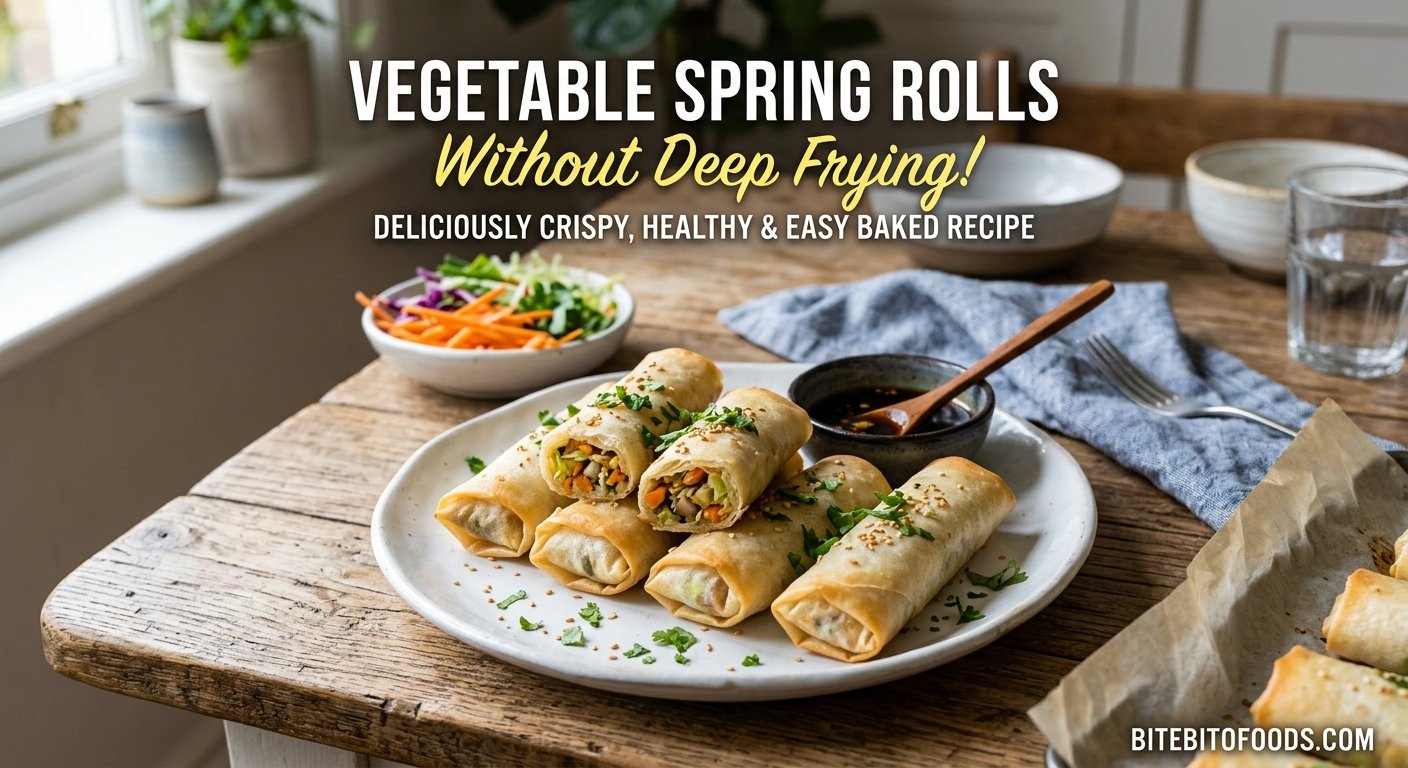
Vegetable Spring Rolls Without Deep Frying: Crispy, Healthy, and Easy to Make

Vegetable spring rolls without deep frying are a delicious way to enjoy a popular Asian-inspired snack without using a large amount of oil. These homemade spring rolls are filled with fresh vegetables, wrapped in thin pastry sheets, and cooked in an air fryer, oven, or skillet until golden and crispy. They are perfect for quick lunches, evening snacks, party appetizers, or a light meal served with your favorite dipping sauce.
The best part about making vegetable spring rolls at home is that you can customize the filling according to your taste. Cabbage, carrots, bell peppers, green onions, and bean sprouts create a colorful and flavorful combination. You can also add mushrooms, cooked noodles, or other vegetables you already have in your refrigerator.
If you love crispy spring rolls but want to avoid deep frying, this recipe is an excellent alternative. With a few simple ingredients and the right cooking technique, you can make spring rolls that are crunchy on the outside and flavorful on the inside.
In this guide, you will learn how to prepare vegetable spring rolls without deep frying, which cooking method works best, how to keep the wrappers crispy, and how to store leftovers for later.
Why You Will Love These Vegetable Spring Rolls
There are plenty of reasons to make these easy vegetable spring rolls at home.
1. No deep frying required
Traditional spring rolls are often submerged in hot oil. This recipe uses an air fryer, oven, or lightly oiled skillet to create a crisp exterior with less oil.
2. Simple, everyday ingredients
You do not need expensive ingredients or complicated equipment. Most of the vegetables used in this recipe are easy to find at grocery stores.
3. Perfect for meal preparation
You can prepare the filling ahead of time, assemble the spring rolls, and refrigerate or freeze them until you are ready to cook.
4. Easy to customize
Add your favorite vegetables, adjust the seasoning, or include cooked noodles for a more filling snack.
5. Great for parties and family snacks
Serve these spring rolls with sweet chili sauce, garlic sauce, or a homemade soy-based dip. They are easy to share and work well as an appetizer.
What Are Vegetable Spring Rolls?
Vegetable spring rolls are thin wrappers filled with seasoned vegetables and cooked until the outside becomes crisp. They are popular across many Asian cuisines, although ingredients, wrapper styles, and cooking methods vary by region.
For this recipe, we use spring roll pastry sheets designed for baking, air frying, or pan-frying. The filling combines shredded cabbage, carrots, bell peppers, and green onions with garlic and simple seasonings.
Unlike deep-fried versions, these vegetable spring rolls are cooked using a smaller amount of oil. The result depends on your cooking method, wrapper type, and how well you control moisture in the filling.
One important detail is to distinguish spring roll pastry from soft rice paper wrappers. Traditional wheat-based spring roll pastry generally works best when you want a crisp, golden finish. Rice paper can also be prepared without deep frying, but its texture will be different.
Ingredients for Vegetable Spring Rolls Without Deep Frying
This recipe makes approximately 10 small to medium spring rolls, depending on the size of your wrappers.
Ingredients
- 10 spring roll pastry sheets
- 2 cups finely shredded cabbage
- 1 medium carrot, grated or cut into thin strips
- 1/2 cup thinly sliced bell pepper
- 2 green onions, finely chopped
- 2 cloves garlic, minced
- 1 teaspoon freshly grated ginger
- 1 tablespoon soy sauce
- 1 teaspoon rice vinegar
- 1/4 teaspoon black pepper
- 1 to 2 teaspoons cooking oil for the filling
- A little oil for brushing the wrappers
- 1 tablespoon flour mixed with 2 tablespoons water, for sealing
You can adjust the quantities according to the size of your wrappers. If you prefer a mild flavor, use less ginger and black pepper. For a little heat, add a pinch of chili flakes.
If you need a gluten-free option, choose certified gluten-free wrappers and replace regular soy sauce with gluten-free tamari. Always check the ingredient labels because many commercial spring roll wrappers contain wheat.
How to Make the Vegetable Filling
The secret to delicious vegetable spring rolls is preparing a filling that is flavorful without being wet.
Step 1: Prepare the Vegetables
Wash the cabbage, carrot, bell pepper, and green onions. Remove excess water and slice everything into thin, even pieces.
Thinly sliced vegetables cook quickly and fit easily inside the wrappers. Large chunks can make the spring rolls difficult to roll and may cause the wrappers to tear.
If you are using mushrooms or bean sprouts, prepare them before cooking. Chop mushrooms finely and drain bean sprouts thoroughly.
Step 2: Heat a Small Amount of Oil
Place a large skillet over medium-high heat and add one or two teaspoons of cooking oil.
Once the oil is warm, add the minced garlic and grated ginger. Stir for approximately 20 to 30 seconds, just until fragrant. Avoid burning the garlic because it can give the filling a bitter taste.
Step 3: Cook the Vegetables
Add the carrots and cabbage to the skillet. Stir-fry for two to three minutes, then add the bell pepper and green onions.
Cook for another two to three minutes, stirring regularly. The vegetables should soften slightly while retaining some texture.
Add the soy sauce, rice vinegar, and black pepper. Mix everything thoroughly so the seasoning coats the vegetables evenly.
Avoid adding too much liquid. A wet filling can make the pastry soggy and difficult to seal.
Step 4: Cool the Filling Completely
Remove the skillet from the heat and transfer the vegetable mixture to a plate or shallow bowl.
Let the filling cool completely before assembling the spring rolls. If you wrap hot vegetables inside pastry sheets, the trapped steam can soften the wrappers and make them more likely to split.
If liquid collects at the bottom of the bowl, drain it before using the filling.
How to Roll Vegetable Spring Rolls
Rolling the spring rolls properly helps prevent the filling from escaping during cooking.
Step 1: Prepare Your Work Surface
Place one spring roll wrapper on a clean, dry surface with one corner pointing toward you, creating a diamond shape.
Keep the remaining wrappers covered with a clean, slightly damp towel if their package instructions recommend it. This helps prevent them from drying out while you work.
Step 2: Add the Filling
Place approximately two tablespoons of the cooled vegetable filling near the lower corner of the wrapper.
Do not overfill the wrapper. Too much filling can make it difficult to roll tightly and may cause the pastry to split.
Step 3: Fold the Wrapper
Fold the bottom corner over the filling. Fold the left and right corners toward the center, keeping the filling enclosed.
Roll the wrapper upward firmly but gently until you reach the top corner.
Step 4: Seal the Edge
Brush a small amount of flour-and-water paste along the final corner. Press gently to seal the spring roll.
Place the finished roll seam-side down on a plate or tray. Repeat with the remaining wrappers and filling.
For the crispiest results, leave a little space between the spring rolls when cooking.
Method 1: Air Fryer Vegetable Spring Rolls
The air fryer is one of the easiest ways to prepare vegetable spring rolls without deep frying. It circulates hot air around the wrappers, helping them turn golden with only a small amount of oil.
Instructions
- Preheat the air fryer to 375°F (190°C), following your appliance’s instructions.
- Lightly brush or spray the spring rolls with cooking oil.
- Arrange them in a single layer in the air fryer basket.
- Leave space between each roll so the hot air can circulate.
- Cook for approximately 8 to 12 minutes, turning them halfway through.
- Check that the wrappers are golden and crisp. Add another minute or two if needed.
Cooking time varies depending on the wrapper thickness, spring roll size, and air fryer model. Start checking early to prevent overbrowning.
If you are cooking frozen spring rolls, follow the wrapper or product instructions and allow additional time when necessary.
Air fryer tip: A light, even coating of oil helps the pastry brown. Too much oil is unnecessary, while completely dry pastry may turn out pale or unevenly crisp.
Method 2: Oven-Baked Vegetable Spring Rolls
If you do not own an air fryer, you can make delicious vegetable spring rolls in a conventional oven.
Instructions
- Preheat your oven to 400°F (200°C).
- Line a baking tray with parchment paper suitable for the cooking temperature.
- Arrange the spring rolls on the tray with space between them.
- Lightly brush each roll with cooking oil.
- Bake for approximately 18 to 25 minutes, turning them halfway through.
- Remove them when the wrappers are golden and crisp.
The exact cooking time depends on the size of the rolls and your oven. Check them during the final few minutes because thin wrappers can brown quickly.
For a more even finish, use the middle oven rack and avoid overcrowding the tray.
Oven-baked spring rolls may not have exactly the same texture as deep-fried ones, but they can still be pleasantly crisp and flavorful.
Method 3: Pan-Fried Vegetable Spring Rolls With Less Oil
Pan-frying is another practical option when you want crispy spring rolls without submerging them in oil.
Instructions
- Heat a nonstick skillet over medium heat.
- Add approximately one to two teaspoons of cooking oil, enough to lightly coat the cooking surface.
- Place the spring rolls in the skillet with the seam facing down.
- Cook for two to three minutes on each side, turning carefully.
- Continue cooking until most sides are golden and the wrappers are crisp.
- Transfer to a plate lined with paper towels if necessary.
Keep the heat moderate. If the pan becomes too hot, the wrapper may brown before the inside is heated through.
Pan-frying works particularly well when you are making only a few spring rolls and do not want to heat the oven.
Tips for Crispy Vegetable Spring Rolls Without Deep Frying
Making crispy spring rolls without deep frying is simple once you understand a few basic techniques.
1. Keep the Filling Dry
Excess moisture is one of the biggest reasons spring rolls become soggy. Cook the vegetables briefly and allow the filling to cool before wrapping.
Drain any liquid that collects in the mixture.
2. Avoid Overfilling
A smaller amount of filling makes the wrappers easier to roll and seal. Overfilled spring rolls can burst during cooking.
3. Use the Right Wrappers
Choose pastry sheets designed for crispy spring rolls. Soft rice paper wrappers behave differently and may become chewy or blistered rather than flaky.
4. Brush With a Little Oil
A light coating of oil encourages browning and crispness. You do not need to soak the wrappers.
5. Do Not Crowd the Cooking Tray
Spring rolls need space for hot air to circulate. If they touch one another, the areas in contact may remain soft.
Cook in batches if necessary.
6. Serve Immediately
Spring rolls are generally crispest just after cooking. As they cool, moisture from the filling can gradually soften the wrapper.
Place freshly cooked spring rolls on a wire rack instead of stacking them on a plate. This allows steam to escape.
7. Let Frozen Spring Rolls Cook Properly
If you freeze uncooked spring rolls, arrange them in a single layer first so they do not stick together. Once firm, transfer them to a freezer-safe container or bag.
Cook them according to the wrapper instructions, adjusting the cooking time as needed.
Best Vegetables for Homemade Spring Rolls
One advantage of homemade vegetable spring rolls is that you can change the filling according to what you have available.
Cabbage: Adds volume, a mild flavor, and a pleasant texture. Green cabbage and napa cabbage are both useful options.
Carrots: Provide natural sweetness and color. Slice them into thin strips or grate them for faster cooking.
Bell peppers: Add freshness and a slight crunch. Red, yellow, and green peppers all work well.
Green onions: Give the filling a mild onion flavor without overpowering the other ingredients.
Mushrooms: Add a savory flavor. Cook them long enough to release excess moisture.
Bean sprouts: Provide a delicate crunch, but drain them thoroughly before adding them to the filling.
Cooked noodles: Make the spring rolls more substantial. Chop the noodles into shorter pieces so they are easier to wrap.
You can also add finely chopped spinach or zucchini. However, watery vegetables should be cooked and drained carefully to prevent soggy wrappers.
What Sauce Goes Best With Vegetable Spring Rolls?
A flavorful dipping sauce can make homemade spring rolls even more enjoyable.
Sweet Chili Sauce
Sweet chili sauce is a popular choice because its sweetness and mild heat complement the savory vegetable filling.
Soy and Garlic Dip
Combine two tablespoons of soy sauce with one tablespoon of rice vinegar, a little minced garlic, and a small amount of water. Add chili flakes if you enjoy spicy flavors.
Peanut Dipping Sauce
Whisk together two tablespoons of peanut butter, one tablespoon of soy sauce, one teaspoon of lime juice, and warm water until smooth. Add a little honey or maple syrup for sweetness if desired.
Simple Lemon-Garlic Sauce
Mix lemon juice, finely chopped garlic, a little water, and a small pinch of salt. This fresh dip works well if you prefer something lighter.
Check the labels on prepared sauces if you need to avoid gluten, added sugar, or particular allergens.
Are Vegetable Spring Rolls Without Deep Frying Healthy?
Vegetable spring rolls made without deep frying can be a useful way to include more vegetables in your meals. They typically require less added oil than traditional deep-fried versions, particularly when prepared in an air fryer or oven.
However, the overall nutritional value depends on the ingredients, portion size, wrapper, dipping sauce, and amount of oil used.
Vegetables provide fiber and a range of vitamins and minerals. The pastry contributes carbohydrates, while the oil adds fat. A vegetable-only filling may provide relatively little protein, so you can serve the spring rolls alongside tofu, edamame, or another protein-rich dish for a more balanced meal.
It is also worth remembering that air-fried and baked foods are not automatically low in calories. The amount of oil and the type of pastry still matter.
For a lighter serving, use plenty of vegetables, brush the wrappers sparingly with oil, and serve a moderate amount of dipping sauce.
Common Mistakes to Avoid
Even a simple spring roll recipe can become frustrating if a few details are overlooked.
Using hot filling: Hot vegetables release steam inside the wrapper, making it soft and difficult to handle. Always cool the filling first.
Using wet vegetables: Water left on washed vegetables can collect inside the filling. Dry them well before cooking.
Rolling too loosely: Loose rolls can open during cooking. Roll firmly without stretching or tearing the wrapper.
Forgetting to seal the edges: Use flour-and-water paste to close the final corner securely.
Cooking at the wrong temperature: Excessive heat can burn the pastry, while insufficient heat can leave it pale and less crisp. Follow the recommended temperature for your cooking method.
Stacking cooked spring rolls: Stacking traps steam and softens the wrappers. Keep them in a single layer until serving.
Using too much sauce inside the filling: Extra liquid makes the spring rolls harder to seal and can produce a soggy result. Season the vegetables lightly and serve additional sauce on the side.
How to Store and Reheat Vegetable Spring Rolls
Homemade spring rolls can be prepared ahead of time, making them convenient for busy weekdays.
Storing Cooked Spring Rolls
Allow the cooked spring rolls to cool, then refrigerate them in an airtight container within two hours. For food safety, keep your refrigerator at 40°F (4°C) or below and eat the leftovers within three to four days.
Avoid sealing them in a container while they are still steaming hot, but do not leave them at room temperature for an extended period.
Reheating in an Air Fryer
Preheat the air fryer to approximately 350°F (175°C). Arrange the spring rolls in a single layer and heat for three to six minutes, checking until they are hot throughout and crisp again.
Reheating in the Oven
Place the spring rolls on a baking tray and heat them at 350°F (175°C) for approximately 8 to 12 minutes. Adjust the time depending on their size and how cold they are.
A microwave can warm the filling quickly, but it usually softens the wrapper. Use an oven or air fryer when maintaining crispness is your priority.
Freezing Uncooked Spring Rolls
Place assembled, uncooked spring rolls on a parchment-lined tray without allowing them to touch. Freeze until firm, then transfer them to a freezer-safe bag or container.
Cook from frozen when the wrapper instructions allow it, increasing the cooking time as needed. Check that the filling reaches a safe temperature, particularly if it contains any meat or other perishable ingredients.
Variations You Can Try
Once you know the basic method, you can easily create different versions of these vegetable spring rolls.
Spicy Vegetable Spring Rolls
Add chili flakes, fresh chopped chili, or a small amount of chili paste to the filling. Adjust the quantity to suit your preference.
Mushroom and Cabbage Spring Rolls
Combine finely chopped mushrooms with cabbage, carrots, garlic, and ginger. Cook the mushrooms until their excess moisture evaporates before wrapping.
Vegetable Noodle Spring Rolls
Mix a small quantity of cooked rice noodles or thin wheat noodles into the vegetable filling. Cut them into short lengths to make rolling easier.
Tofu Spring Rolls
Add crumbled or finely diced firm tofu for extra protein. Cook the tofu first so that it releases excess moisture and develops a firmer texture.
Garlic Vegetable Spring Rolls
Increase the garlic slightly and add freshly ground black pepper. This simple adjustment gives the filling a deeper savory flavor without requiring a complicated sauce.
What to Serve With Vegetable Spring Rolls
Vegetable spring rolls work well as a snack, appetizer, or part of a larger meal.
For a light lunch, serve them with a bowl of vegetable soup. For a more filling dinner, pair them with vegetable fried rice, stir-fried noodles, or a tofu and vegetable stir-fry.
They also fit nicely on a party platter alongside cucumber slices, fresh carrots, and small bowls of dipping sauce.
If you are serving several people, prepare a mixture of sauces so everyone can choose their favorite. Sweet chili sauce, soy-garlic dip, and peanut sauce offer different flavors without requiring much extra preparation.
Frequently Asked Questions
Can I make vegetable spring rolls without deep frying?
Yes. You can prepare them in an air fryer, bake them in the oven, or pan-fry them using a small amount of oil. The air fryer and oven are particularly convenient if you want to avoid submerging the spring rolls in oil.
How do I make spring rolls crispy without deep frying?
Use suitable pastry wrappers, keep the filling dry, roll the spring rolls firmly, and apply a light coating of oil. Cook them in a preheated air fryer or oven with enough space for air to circulate.
Can I make vegetable spring rolls without oil?
Yes, depending on the wrapper and cooking equipment. You can try baking or air frying them without added oil, but the wrappers may brown less evenly and may not become as crisp. Check the wrapper manufacturer’s instructions.
Why are my vegetable spring rolls soggy?
The most common reasons are excess moisture in the filling, hot vegetables inside the wrappers, overcrowding, and trapped steam after cooking. Cool and drain the filling, cook the rolls in a single layer, and serve them soon after cooking.
Can I use frozen vegetables?
Yes. Thaw the vegetables if necessary and drain them thoroughly. Cook them until excess moisture evaporates before adding the seasonings. This helps prevent soggy spring rolls.
Are rice paper wrappers suitable for this recipe?
Rice paper can be used, but the texture differs from traditional spring roll pastry. Rice paper may become chewy or blistered when cooked, so follow instructions specifically suited to the wrapper you choose.
Can I prepare vegetable spring rolls ahead of time?
Yes. You can make the filling ahead, cool it, and refrigerate it in a covered container. You can also assemble the spring rolls in advance and refrigerate them briefly before cooking. Keep them covered to prevent the wrappers from drying out, and follow safe food-storage practices.
What is the best way to reheat spring rolls?
An air fryer or oven generally gives the best results. These methods help restore the crisp exterior, whereas microwave reheating tends to make the wrappers softer.
Are homemade vegetable spring rolls vegan?
They can be vegan if the pastry contains no egg or dairy ingredients and the dipping sauce is also plant-based. Check the labels of the wrappers, sauces, and other packaged ingredients.
Can I make gluten-free vegetable spring rolls?
Yes, if you use gluten-free wrappers and seasonings. Regular spring roll pastry and standard soy sauce often contain wheat, so check product labels carefully and use suitable alternatives.
Final Thoughts
Vegetable spring rolls without deep frying are a simple, versatile way to enjoy a crispy homemade snack with less oil than traditional deep-fried spring rolls. With fresh vegetables, thin pastry wrappers, and a few basic seasonings, you can create a flavorful appetizer that works for everyday meals and special occasions.
The key to success is keeping the filling dry, allowing it to cool before wrapping, sealing each roll carefully, and choosing the right cooking method. Whether you use an air fryer, oven, or skillet, a little preparation can make a noticeable difference in the final texture.
Try the basic cabbage-and-carrot filling first, then experiment with mushrooms, noodles, tofu, or your favorite vegetables. Serve the finished spring rolls with a dipping sauce you enjoy, and make a larger batch whenever you want an easy snack ready for the week.
Once you learn how to prepare vegetable spring rolls without deep frying, you may find yourself making them regularly. They are customizable, convenient, and delicious when served hot and crisp.